


Airway Orthodontics
in Queens, NY
Orthodontic Care That Considers How You Breathe
SimpliBraces offers airway-focused orthodontic treatment for patients across Queens, evaluating jaw structure, palate width, tongue posture, and breathing patterns alongside every smile.
Why Queens Patients Choose SimpliBraces for Airway Orthodontics
We go beyond straight teeth. Evaluating the airway, jaw development, and breathing function as part of every comprehensive treatment plan, for kids and adults alike.
How You Breathe Affects How Your Face and Jaw Develop, and Vice Versa.

Traditional orthodontics focuses on aligning teeth and correcting bites. Airway orthodontics takes a broader view, considering how the structure of the jaws, palate, and oral cavity affects breathing, sleep, and long-term health. Dr. Yelizar is a board-certified Queens orthodontist who evaluates the airway as part of every comprehensive treatment plan, and who offers targeted interventions for patients, especially children, whose orthodontic needs intersect with breathing and sleep concerns. Schedule a consultation to have your bite, palate, and airway evaluated together.
What Is Airway Orthodontics?
Airway orthodontics, sometimes called airway-focused orthodontics or orthodontic airway treatment, refers to an approach that incorporates the upper airway into orthodontic diagnosis and treatment planning. The premise is straightforward: the teeth, jaws, tongue, and airway all occupy the same space and influence each other. An orthodontic plan that ignores the airway may produce a straight smile that sits on top of an unaddressed breathing problem.
This doesn't mean every orthodontic patient has a breathing disorder. It means that for patients who do have airway-related concerns, chronic mouth breathing, narrow palates, sleep-disordered breathing, tongue restriction, orthodontic treatment can be designed to address both the teeth and the underlying structural contributors at the same time.
The Connection Between Jaw Structure and the Airway
The airway, the passage through which air travels from the nose and mouth to the lungs, passes directly through the oral and pharyngeal space that the jaws frame. When the jaws and palate develop in ways that constrict this space, the result can be reduced airflow, increased breathing effort, and in some cases disordered breathing during sleep.
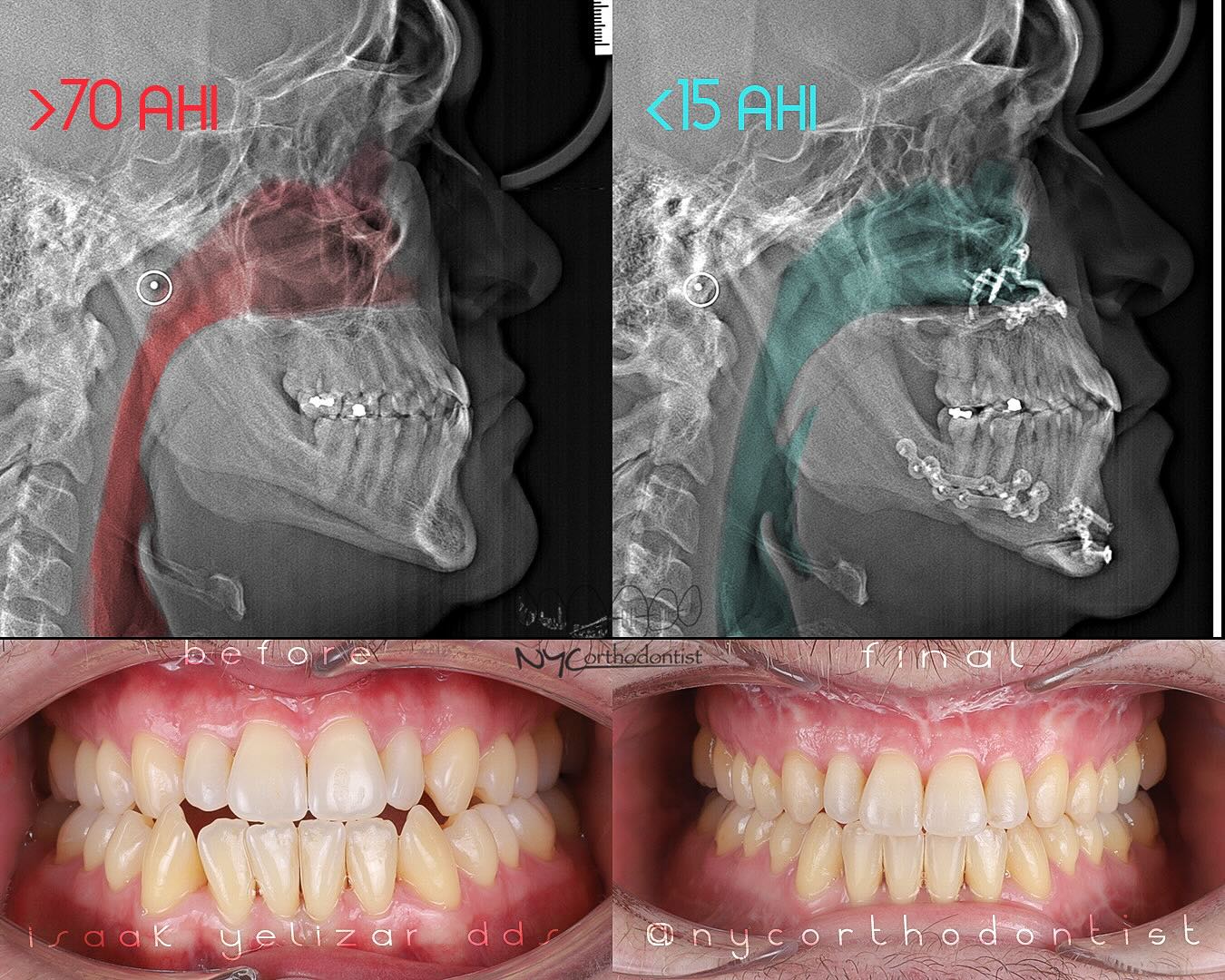
A narrow upper palate, for example, doesn't just create dental crowding, it also reduces the floor space of the nasal cavity, which sits directly above it. Patients with significantly narrow arches often have reduced nasal airflow and rely more heavily on mouth breathing. A lower jaw that is positioned too far back can crowd the tongue into the posterior airway, reducing the space behind the tongue during sleep, a key factor in obstructive sleep apnea.
These structural relationships mean that orthodontic interventions like palate expansion and jaw repositioning can have meaningful effects on airway dimensions, effects that go beyond cosmetics and bite correction.
Mouth Breathing and Its Effects on Development
Nasal breathing is the physiologically normal mode of breathing at rest. When a child breathes primarily through the mouth, due to nasal obstruction, allergies, enlarged tonsils or adenoids, or habit, it changes the forces acting on the developing jaws and face in ways that compound over time.
Normal nasal breathing keeps the tongue resting against the roof of the mouth (the palate). This upward tongue pressure helps the palate develop wide and forward. Mouth breathing drops the tongue to the floor of the mouth, removing this pressure. Without it, the palate often develops narrow and high-arched, the upper jaw can become constricted, and the lower jaw may drop into a retruded position.
The clinical term for the characteristic facial pattern associated with chronic mouth breathing is "adenoid facies", a long, narrow face with a high-arched palate, dental crowding, open bite tendency, and sometimes dark circles under the eyes from poor sleep. Recognizing these patterns early and addressing them with palate expansion, jaw development treatment, or referral to an ENT or myofunctional therapist can change the developmental trajectory.
Tongue Tie and Airway
The tongue is a critical player in airway development and breathing mechanics. When the tongue's range of motion is restricted, as in tongue tie (ankyloglossia), where the lingual frenulum is too short or tight, it can't rest properly against the palate during development. This affects palate width, jaw relationship, and airway dimensions in growing patients.
In adults and older children, restricted tongue mobility can contribute to an inferior tongue resting posture that crowds the posterior airway during sleep, increasing the risk of snoring and obstructive sleep apnea. Assessment of tongue mobility is a routine part of airway-focused orthodontic evaluation at SimpliBraces.
Palate Expansion as Airway Treatment
Rapid palate expansion (RPE) is one of the most well-studied orthodontic interventions with documented effects on the upper airway. By widening the upper jaw, palate expansion directly increases the floor of the nasal cavity, the nasal floor and the palate are the same structure. Multiple studies have shown measurable improvements in nasal airflow following palate expansion in children, including reductions in nasal resistance and improved nasal breathing patterns.
For children with narrow palates, documented nasal obstruction, and mouth breathing patterns, palate expansion may address both the dental crowding and a structural contributor to the breathing problem simultaneously. The timing of expansion matters significantly, the midpalatal suture, which is opened during expansion, fuses in early-to-mid adolescence. After fusion, expansion requires surgical assistance.
Palate expansion is not a treatment for sleep apnea in isolation, and patients with diagnosed sleep-disordered breathing should be evaluated by a sleep physician as well. But it is a meaningful piece of a coordinated treatment approach for children with combined orthodontic and airway concerns.
Airway Orthodontics and Pediatric Sleep-Disordered Breathing
Obstructive sleep apnea is increasingly recognized in children, though it presents differently than in adults. Pediatric sleep-disordered breathing can manifest as snoring, restless sleep, bedwetting, behavioral problems, difficulty concentrating in school, and hyperactivity, symptoms that are often misattributed to ADHD or developmental issues.
Structural factors that orthodontics can address, narrow palates, retrognathic lower jaws, restricted tongue posture, can contribute to pediatric sleep-disordered breathing. When a child presents with signs of poor sleep quality alongside orthodontic findings consistent with airway compromise, airway-focused treatment planning can be part of a collaborative approach with the child's pediatrician, ENT, or sleep specialist.
Dr. Yelizar does not diagnose or treat sleep apnea. But he does recognize the orthodontic patterns associated with airway risk, communicates these findings to families clearly, and coordinates with other providers when appropriate, ensuring that orthodontic treatment is part of a complete picture of the child's health.
Airway Considerations in Adult Orthodontic Patients
Airway-focused orthodontic thinking isn't limited to children. Adult patients with retrognathic jaw positions, narrow arches, and restricted tongue mobility may have airway dimensions that are affected by how orthodontic treatment is planned.
In particular, extraction-based orthodontic treatment, removing premolars to create space for crowded teeth, has been a subject of ongoing discussion in the orthodontic literature regarding its effects on arch width and posterior airway space. At SimpliBraces, Dr. Yelizar evaluates extraction decisions carefully and, where possible, prefers non-extraction approaches that maintain or improve arch width and tongue space. Every case is individual, and sometimes extractions are the right clinical choice, but this decision is made with the full picture in mind, not as a default protocol.
What to Expect at an Airway-Focused Consultation
A consultation at SimpliBraces includes evaluation of the teeth, bite, and jaws, but also incorporates a review of breathing patterns, tongue posture and mobility, tonsil size, nasal airflow, and sleep quality when relevant. You won't be handed a standard treatment plan without these factors being considered.
For children, we'll review developmental history and ask about breathing patterns during sleep, whether mouth breathing is observed, and whether there are any known airway concerns. For adults, we'll discuss relevant symptoms and history as part of building a complete treatment picture.
Where findings suggest concerns that fall outside orthodontic scope, enlarged tonsils, suspected sleep apnea, significant nasal obstruction, we'll communicate clearly and refer to appropriate specialists. Orthodontics is often most effective as part of a coordinated team approach.
Why Choose SimpliBraces for Airway Orthodontics in Queens?

Most orthodontists are well-trained to straighten teeth. Fewer consistently think about what's happening behind the teeth, in the airway, the tongue, the breathing pattern, and the developing face.
Dr. Yelizar approaches every patient with an understanding that the mouth is not isolated from the rest of the body. His evaluation of growing patients is specifically designed to identify structural patterns that affect both orthodontic outcomes and airway health. When those patterns are present, treatment is planned to address both, not to choose one at the expense of the other.
We serve patients from Rego Park, Forest Hills, Kew Gardens, Elmhurst, Corona, and across Queens who are looking for orthodontic care that goes beyond cosmetics. Our office is located at 63-109 Saunders St #BA2, Rego Park, NY 11374.
Schedule Your Evaluation
Whether you're a parent concerned about your child's breathing and development, or an adult who wants orthodontic treatment planned with your long-term health in mind, contact SimpliBraces to schedule a consultation. We'll take the time to evaluate the full picture, and give you an honest, thorough assessment of what we see.
Hear from Patients

Simpli the best! Feeling blessed to have met Dr Yelizar. I got braces 3 times (span of 25 years), Dr Yelizar is my 4th ortho and he finally fixed my issue. He is a problem solver, perfectionist, and extremely passionate about his work. Followed Dr Yelizar on Instagram for 2 years and thought he was in Connecticut. After 2 years, I checked again hoping he relocated to New York City. To my surprise, he was always in Forest Hills. So I am very glad he is now my orthodontist. I highly recommend Dr Yelizar!
We're proud to take a whole-health approach to orthodontic care for patients across Queens.
Our Affordable Payment Options
We work with patients across Queens to make orthodontic care easier to budget. Ask our team about the options below during your visit.
Frequently Asked Questions, Answered!
Questions about airway orthodontics in Queens? Here are the ones we hear most often from parents and patients exploring this approach to care. If you need more information, please contact our office.
What Is Airway Orthodontics and How Is It Different from Regular Orthodontics?
Traditional orthodontics focuses primarily on tooth alignment and bite correction. Airway orthodontics incorporates the upper airway, the nasal passage, oral cavity, and throat, into the diagnosis and treatment planning process. The goal is to ensure that orthodontic treatment not only straightens teeth but also supports healthy breathing, normal nasal airflow, and proper jaw development. For patients with airway-related concerns, this broader perspective can produce better long-term outcomes.
Is Airway Orthodontics Only for Children?
No, though children benefit most because their jaws are still growing and structural changes are more achievable. In growing patients, palate expansion, jaw repositioning appliances, and early intervention can meaningfully improve airway dimensions. For adults, the focus shifts to orthodontic treatment planning that supports rather than compromises existing airway space, and to identifying when referral to a sleep or ENT specialist is appropriate.
How Do I Know If My Child Has an Airway Problem Related to Their Teeth?
Signs that airway concerns may be present alongside orthodontic issues include: mouth breathing during the day or while sleeping, snoring, restless sleep, bedwetting beyond typical ages, chronic nasal congestion, dark circles under the eyes, long narrow facial proportions, a high-arched narrow palate, and significant dental crowding. These signs don't confirm a diagnosis, but they're worth discussing at a consultation so Dr. Yelizar can assess the full picture.
Can Orthodontics Treat Sleep Apnea?
Orthodontic interventions like palate expansion can improve nasal airflow and contribute to better airway dimensions, which may benefit patients with mild sleep-disordered breathing. However, sleep apnea is a medical diagnosis that requires evaluation and management by a sleep physician. Dr. Yelizar does not diagnose or treat sleep apnea but can identify structural patterns associated with airway risk and coordinate care with appropriate specialists.
What Is Palate Expansion and How Does It Help Breathing?
Palate expansion uses an appliance, typically a rapid palate expander (RPE), to widen the upper jaw by gradually separating the midpalatal suture. Because the palate is also the floor of the nasal cavity, widening it increases the volume of the nasal airway. Research has shown that palate expansion in children can reduce nasal resistance and improve nasal airflow. It also creates room for crowded teeth, which means it often addresses dental and airway concerns simultaneously.
At What Age Should My Child Be Evaluated for Airway-Related Orthodontic Issues?
The American Association of Orthodontists recommends a first evaluation by age 7. For children with visible signs of mouth breathing, chronic congestion, or sleep concerns, earlier evaluation can be appropriate. The palatal suture fuses during adolescence, earlier expansion is more effective and less complex than later expansion, so timing matters.
What Is the Relationship Between Tongue Tie and the Airway?
A restricted lingual frenulum (tongue tie) limits the tongue's ability to rest against the palate. In growing children, this removes the natural upward pressure that helps the palate develop wide and forward, contributing to narrow arches and reduced nasal airway volume. In adults, restricted tongue mobility can affect resting tongue posture, potentially reducing posterior airway space during sleep. Assessing tongue mobility is part of our airway-focused evaluation.
Does Removing Teeth for Braces Affect the Airway?
This is an active area of discussion in orthodontics. Some research suggests that extraction-based treatment in certain cases can reduce arch width and posterior airway space. The evidence is not conclusive, and extractions are sometimes the correct clinical choice. At SimpliBraces, Dr. Yelizar evaluates extraction decisions carefully, prefers non-extraction approaches when clinically appropriate, and considers the broader structural implications, including airway space, when planning treatment.
Will Insurance Cover Airway-Focused Orthodontic Treatment?
Orthodontic benefits cover the correction of dental and bite issues, which is what airway-focused treatment addresses alongside breathing concerns. The orthodontic component of treatment is typically covered under standard orthodontic benefits. Our team will review your plan and help you understand what's included before treatment begins.
Does SimpliBraces Work with Other Specialists for Airway Cases?
Yes. Airway concerns that fall outside orthodontic scope, such as enlarged tonsils, diagnosed sleep apnea, or significant nasal obstruction, may require evaluation by an ENT, a sleep physician, or a myofunctional therapist. Dr. Yelizar communicates clearly when referral is appropriate and is comfortable coordinating with other providers to ensure patients receive complete care.